

Ask whether THCA flower is still legal in Texas and you will get a confident answer pinned to the wrong date. Nearly every page on the internet ties the end of THCA flower in Texas to 31 July 2026 — the day the state's republished controlled-substances schedules took effect. The outcome those pages describe is correct. The instrument, the date, the legal theory and the courthouse are all wrong. That is not a pedantic complaint: the two Texas instruments in play are being challenged separately, in different courts, on different grounds, and if you have merged them into one event you cannot tell which ruling would change anything.
General information, not a substitute for the advice of an attorney. Jurisdiction: Texas, with federal law where noted. Information current as of August 2026.
The short answer, and the date that belongs with it
Conventional THCA flower stopped meeting the Texas standard on 2026-03-31, when the Department of State Health Services consumable-hemp program rules at 25 TAC ch. 300 took effect. Those rules measure potency as total delta-9, calculated THCA-inclusive (25 TAC §300.101(1), §300.302(b)). The scheduling notice everyone cites — 51 TexReg 4597 — did not take effect until 2026-07-31, four months later, and it is a different kind of legal instrument doing a different job. This is the full two-instrument breakdown in miniature, applied to one cannabinoid.
Instrument A: the March rule, which is the one that did it
25 TAC ch. 300 is an ordinary agency rule, adopted through ordinary rulemaking and effective 2026-03-31. It sets the consumable-hemp program for Texas: an acceptable hemp THC level, a 21-and-over age gate at §300.701, registration and licensing duties, certificate-of-analysis requirements, labeling at §300.402(a) and packaging at §300.405. Buried in the definitions section is the sentence that ends THCA flower as a retail category.
Under 25 TAC §300.101(1), total delta-9 is calculated as (0.877 × THCA) + delta-9, against a threshold of 0.3% dry weight at §300.302(b). This THCA-inclusive standard effectively excludes conventional THCA flower from the Texas consumable-hemp category.
Note what the rule does not do. It never prohibits THCA by name. The only place THCA appears in 25 TAC §300.101(1) is inside an equation. The category was not outlawed; it was measured out of existence. That is a quieter mechanism than a named prohibition, and it is why so much coverage still reaches past it for the July notice.
Instrument B: the July notice, and what it never mentions
51 TexReg 4597 is not a rule. It is an "In Addition" notice republishing the DSHS controlled-substances schedules under Tex. Health & Safety Code §481.034, published 2026-07-10 and effective 2026-07-31. It carried no notice-and-comment period, which is one reason "rule" is the wrong word for it — and that procedural posture is itself among the things now being litigated. It reinstates Schedule I definitions first adopted in January 2021 (46 Tex. Reg. 1763) that a Travis County injunction had frozen since 2021-11-08, and which the Texas Supreme Court unfroze on 2026-05-01 in No. 23-0887. The notice itself is public, and it is worth reading for what is absent from it.
The operative language never names delta-8, delta-10, THCP or THCA. It works definitionally: it controls tetrahydrocannabinols "except for up to 0.3% delta-9-tetrahydrocannabinols in hemp," together with synthetic equivalents and derivatives "and their isomers with similar chemical structure and pharmacological activity" (51 TexReg 4597, item (31)). The single carve-out is delta-9 at or below 0.3% in hemp. The non-delta-9 THC isomers fall inside the schedule by identity, which is why delta-8 and delta-10 are caught by it and why concentration arguments do not save them.
51 TexReg 4597 does not name THCA, and whether its definitions reach THCA is an open question. The March total-delta-9 standard at 25 TAC §300.101(1) independently decides the retail-flower question, and that standard was already in force four months before the notice took effect.
Why the distinction has teeth
The two instruments are in two different court systems, and neither case has finished.
- The March rule (25 TAC ch. 300) is being fought in state court — Travis County, now before the Texas Fifteenth Court of Appeals. It is in effect, under appeal.
- The July notice (51 TexReg 4597) was challenged in federal court — the Southern District of Texas at Galveston, before Judge Jeffrey Brown, in a suit filed 2026-08-03 by two retailers and a distributor against DSHS, the Attorney General and Galveston County officials. Judge Brown denied an emergency order on 2026-08-09/10 for an insufficient showing of irreparable harm. As of August 2026, the court had denied temporary emergency relief.
So the two can move independently, and the practical consequence is concrete. If the Fifteenth Court of Appeals restores an injunction against the March rule, THCA's position in Texas could change while delta-8's does not — because delta-8's exclusion comes from the other instrument, in the other court. The reverse is equally true: an order in the federal case at Galveston would speak to the scheduling notice and would leave the total-delta-9 measurement standard at 25 TAC §300.101(1) untouched. Any article that has fused these into a single "Texas THC ban" cannot describe either outcome, because it does not have the parts.
"Effectively" is doing real work in that sentence
Careful writers say THCA flower is effectively banned in Texas rather than banned outright, and the hedge is accurate rather than timid. No Texas instrument names THCA flower as a prohibited product. What exists is a measurement standard that conventional THCA flower cannot pass (25 TAC §300.101(1), §300.302(b)), which means the material is not hemp under the Texas consumable-hemp program and cannot lawfully be sold through it. The route to the same destination matters, because it is the measurement standard — not a named prohibition — that is on appeal.
The federal layer arrives 2026-11-12
Federal law is a separate track, and it moves on 2026-11-12 under §781 of P.L. 119-37, enacted 2025-11-12. The delta-9-only test becomes a total-THC test at 0.3% dry weight, inclusive of THCA — which is to say the federal total-THC standard arrives November 12 and lands where Texas has already been since March. The Congressional Research Service has published an overview. A one-month, partial delay to that date passed the Senate as part of a continuing resolution and has not become law; under §781 as enacted, 2026-11-12 remains the operative date. That fight is unresolved and moves faster than this page does, so the federal tracker is where we maintain it — this page states the date and defers on the rest.
What is still genuinely unsettled
- THCA's federal status before 2026-11-12. This is contested. The DEA's stated position and the post-harvest argument advanced by some cannabis attorneys reach opposite conclusions, and we are not going to pretend one of them has won. After 2026-11-12, §781 of P.L. 119-37 resolves it prospectively by folding THCA into a total-THC calculation.
- Both cases. As of August 2026, the litigation record described a state appeal concerning 25 TAC ch. 300 and a federal challenge concerning 51 TexReg 4597. The federal court had denied temporary emergency relief.
The question we are not going to answer
The message we get most often is some version of "I have flower I bought legally in Texas — what now?" We are declining that one, deliberately and in the open, rather than burying the refusal in a disclaimer at the bottom of the page.
The answer depends entirely on particulars we do not have: what the material actually is, what a current laboratory report says about it, and where the two Texas cases stand on the day you ask. Applying law to one person's specific facts is what a lawyer does, and a general-audience article that pretends otherwise is doing that person a disservice. That conversation belongs with an attorney licensed in Texas, not with a blog post — including this one. What we can do is keep the Texas status summary current, so the facts taken into it are current too.
Frequently asked questions
Is THCA flower legal in Texas?
Not as a practical matter, and it has not been since 2026-03-31. Texas measures potency as total delta-9, calculated as (0.877 × THCA) + delta-9 under 25 TAC §300.101(1), against a threshold of 0.3% dry weight at §300.302(b). Conventional THCA flower does not pass that calculation, so it is not hemp under the Texas consumable-hemp program.
Did the July scheduling notice ban THCA flower?
Not the part that did the damage. Conventional THCA flower had already stopped meeting the Texas standard on 2026-03-31, through the total-delta-9 calculation at 25 TAC §300.101(1) — four months before 51 TexReg 4597 took effect. The notice names no cannabinoid at all: it works by definition, controlling tetrahydrocannabinols with a single carve-out for delta-9 at or below 0.3% in hemp, which is what catches delta-8 and delta-10. Whether those definitions also reach THCA is not something we could verify from the text, and it does not change the outcome, because the March measurement standard disqualifies conventional flower either way.
Why does it matter which instrument did it?
Because they are in different courts. As of August 2026, the litigation record described an appeal concerning 25 TAC ch. 300 before the Texas Fifteenth Court of Appeals and a federal challenge concerning 51 TexReg 4597 in the Southern District of Texas, where an emergency order had been denied on 2026-08-09/10. A ruling in one case does not move the other, so a reader who has merged them cannot work out what a given decision would change.
Is THCA legal federally right now?
That question is genuinely contested and this page does not resolve it. The DEA's position and the post-harvest argument made by some cannabis attorneys point in opposite directions. What is settled is the future: from 2026-11-12, §781 of P.L. 119-37 measures total THC inclusive of THCA at 0.3% dry weight, with a ceiling of 0.4 mg total THC per container on finished products.
Does the appeal mean THCA flower might come back?
An order from the Texas Fifteenth Court of Appeals restoring an injunction against 25 TAC ch. 300 is the ruling most directly on point, and that appeal is live. Three things temper it: no appellate outcome is predictable in advance; the scheduling notice at 51 TexReg 4597 is being litigated separately, and we do not assert what its definitions do or do not reach for THCA; and the federal total-THC standard under §781 of P.L. 119-37 arrives 2026-11-12 and reaches the same measurement independently.
Does a smell-proof bag change my legal position in Texas?
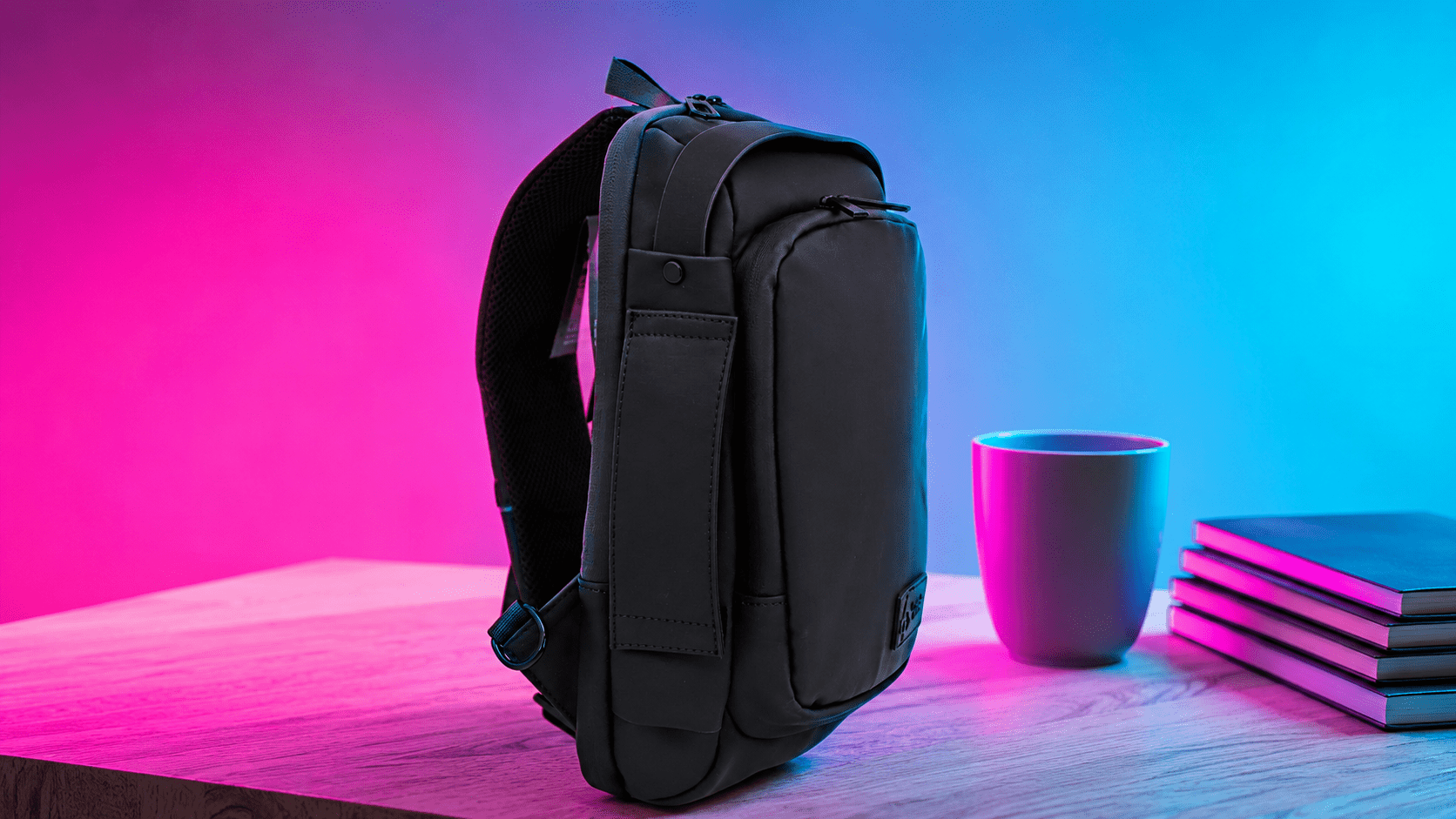
Texas law governing hemp and controlled substances focuses on what a product contains and how it is classified. A smell-proof bag provides ordinary storage, odor containment, organization, and privacy; any contents remain subject to the laws that apply to them.
About this article
This article is general information about the law, published for educational purposes. It is not a substitute for the advice of an attorney. Laws change and vary by state — consult an attorney licensed in your jurisdiction about your specific situation. Jurisdiction covered: Texas, with federal law where noted. Information current as of August 2026.
Sources: the DSHS consumable-hemp program rules at 25 TAC ch. 300, in particular §300.101(1), §300.302(b), §300.402(a), §300.405 and §300.701; the Texas Register notice published 2026-07-10 at 51 TexReg 4597; the Texas Supreme Court opinion in No. 23-0887 of 2026-05-01; §781 of P.L. 119-37 and the Congressional Research Service overview of the federal hemp redefinition; and Texas Tribune reporting on the suit filed 2026-08-03 and the emergency order denied on 2026-08-09/10. Published by The FireBar Labs Team.
Open questions the public record does not answer: whether 51 TexReg 4597’s definitions reach THCA — the notice does not name it, and the March measurement standard decides the retail question without it — along with the federal status of THCA before 2026-11-12 and the outcome of either pending case.
Explore FireBar Labs
Questions about any of this? Email support@firebarlabs.com.
Share:
Continue Reading
What a Buyer Must Verify in 2026: COAs, Packaging, Age Checks and the November Cliff
You Bought It Legally. Then Texas Rescheduled It.