


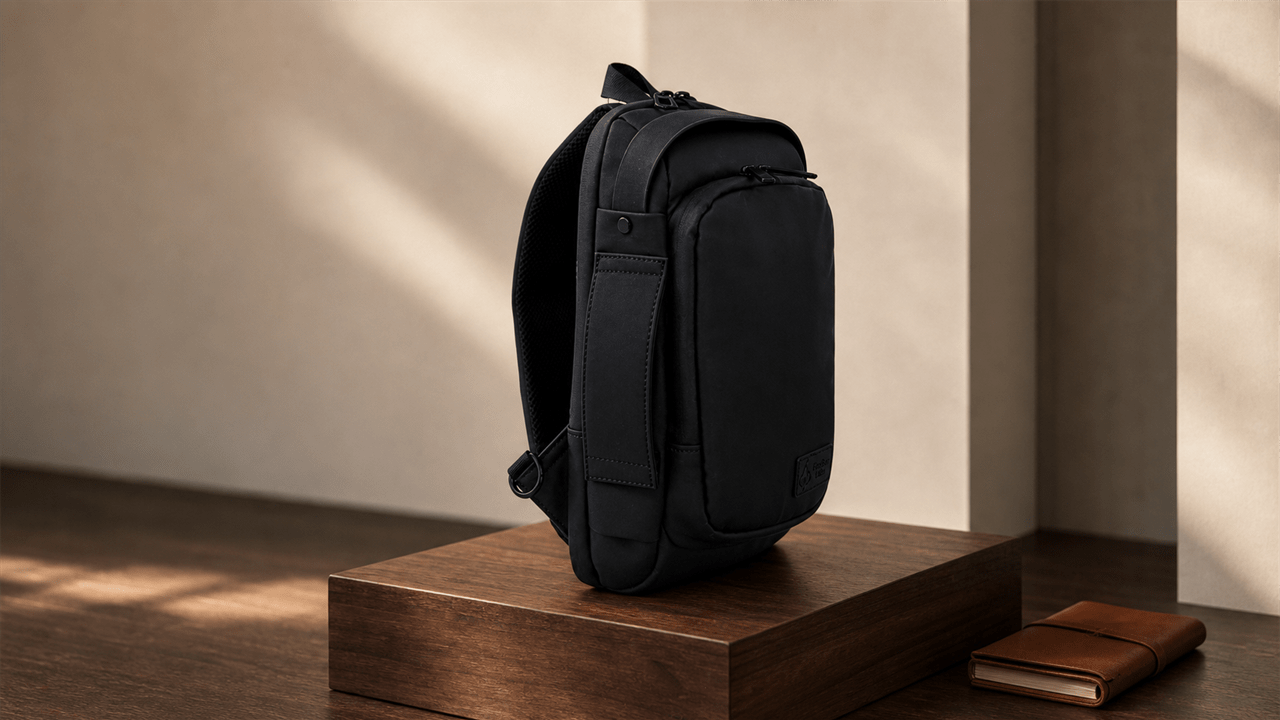
There are a lot of smell-proof bags on the market. Most of them announce what they are from across the room. Tactical webbing. Branded smell-proof logos. Names that lean into the function. A silhouette that signals "this is the bag for that thing."
We built FireBar Labs the opposite direction. Every bag in our line is designed to look like a premium everyday-carry bag first, with the engineering hidden where it belongs — inside. This post is about why.
The principle
The best products are designed around the person carrying them, not around the brand carrying them.
That sounds obvious. It's not how most of the premium-carry category works. Most premium bags are designed to communicate the brand to other people — to make a statement that you can afford the thing, or that you belong to the tribe that buys the thing. The logo gets bigger. The hardware gets shinier. The silhouette becomes "the bag."
We picked the opposite direction. Our bags are designed to be quiet. Premium materials, intentional minimalism, hardware that does its job and doesn't ask for attention.
What that looks like in practice
Three concrete choices we made:
The branding is small. Our logos are soft-embossed, sized to be visible up close and invisible across a room. Some customers want their bag to broadcast — most of our customers want their bag to do its job and not be the topic of conversation. We design for the second group.
The hardware is matte. Brushed metal over polished. Black or dark gray over chrome. The lock blends into the bag instead of contrasting against it. The strap clips don't catch light. The zippers don't shine. All design choices that come from the same principle: the bag should not announce itself.
The silhouette reads "everyday." From the outside, the Executive Tech Crossbody reads as a premium everyday-carry bag — the kind of bag you might see in an editorial spread. There's nothing about its shape that signals what it does for a living. The engineering — the activated charcoal sealing, the hidden anti-hack lock, the USB-C passthrough — all lives inside, where it belongs.
Why this matters
There's a freedom in being able to carry a bag without having to explain it.
The bag does the thing. You don't have to talk about it. You don't have to perform for anyone. The bag does the job, the engineering stays internal, the silhouette stays quiet. Whether you tell people what's inside is your call — the bag itself doesn't make that call for you.
That's design that honors how you actually live. Not design that demands attention for itself.
The line
We build two product categories:
- Executive Tech — the premium tier. Multi-layered waterproof vegan leather, hidden anti-hack combination lock, USB-C passthrough port. The Crossbody, the Hybrid Duffle, the Adventure Backpack, the Elite Backpack. Built for the customer who treats their bag as the daily-driver for the next 5+ years.
- Essentials — the everyday tier. 5-layer activated carbon liner, gasket-sealed zipper, built-in combination lock. The Mini Duffle, the Messenger, the Crossbody, the Fanny Pack, the Tactical Sling. Built for the customer who wants the engineering without the premium price.
Both lines share the design principle. Both lines hide the engineering. Both lines look like premium everyday carry from the outside and reveal their function up close.
The brand we're building
We're not the loudest brand in the category. We're not trying to be. We're building a quiet, durable, premium brand for the customer who values the design choice as much as the function.
Thanks for reading. If you've been thinking about a bag, the Crossbody is the most-versatile starting point. If you've already got one, thanks for trusting us with it.
— The FireBar Labs Team
Share:
Continue Reading
Activated coconut charcoal vs synthetic carbon: why the source actually matters
Inside the StealthWear collection